
Before purchasing non-woven fabric, procurement personnel must confirm the basis weight, color, width, composition, and tensile strength requirements.
1.Grammage
Basis weight refers to the weight of non-woven fabric per square meter, typically expressed in units of g/m² (GSM).
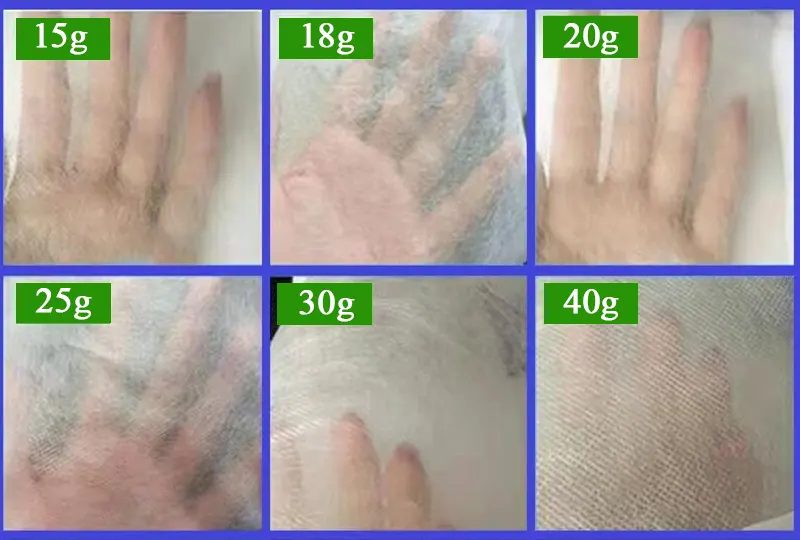
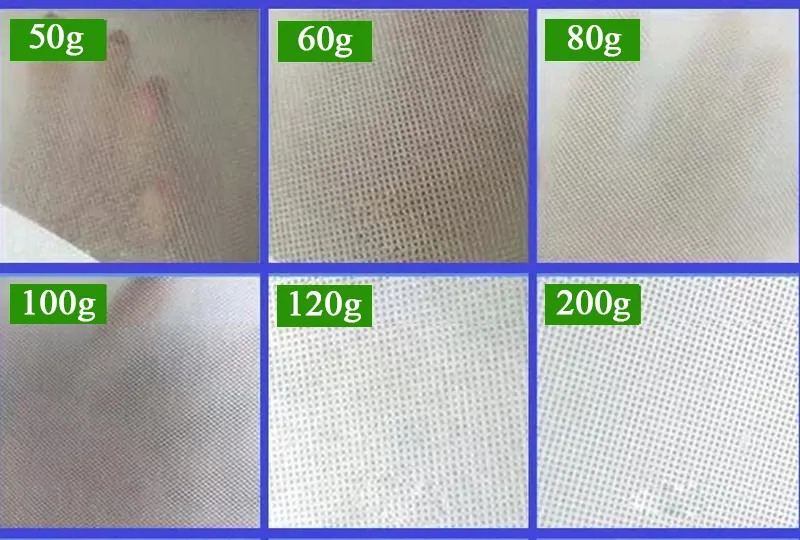
Why It Important: Basis weight directly influences a fabric’s thickness, hand feel, stiffness, breathability, and fundamental strength. Low basis weights (10–30 gsm) are suitable for applications such as face masks and disposable bed sheets, whereas high basis weights (80–150 gsm and above) are ideal for shopping bags, agricultural ground covers, and industrial liners.
Common Misconception: Relying solely on perceived “thickness” without verifying the actual basis weight value; different manufacturing processes (e.g., spunbond vs. spunlace) can result in fabrics that feel different in thickness, even when sharing the exact same basis weight.
Verification Recommendation: Require suppliers to explicitly state the basis weight in their quotations or contracts, and to establish an agreed-upon tolerance range (typically, ±3–5% is considered a reasonable margin).
2.Color
The available colors include black, white, and various custom colors. White and blue are used for mattress spring uint, face masks, protective clothing, and similar items; black and gray are used for sofas; and agriculture requires both black and white.
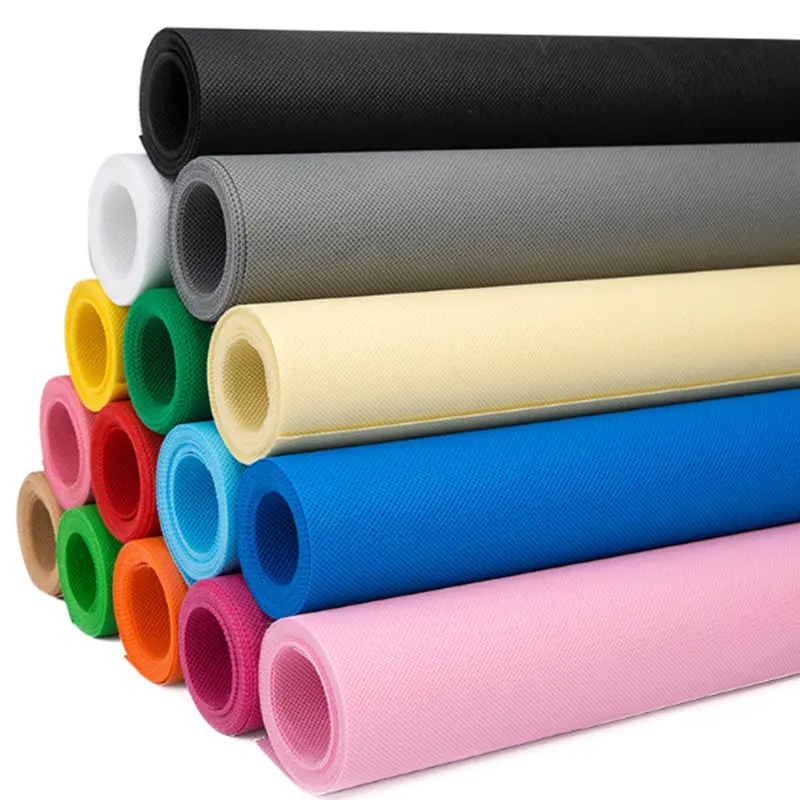
Why It Important: Industries such as healthcare, cosmetics, and furniture have extremely stringent requirements regarding color consistency. Color discrepancies can render different production batches incompatible for mixing or result in a lack of visual uniformity in the finished products.
Key Considerations:
Determine whether a color sample approval (sealing sample) process is required.
Determine whether fade resistance is a requirement (e.g., for outdoor products, UV resistance is necessary).
For custom colors, confirm the Minimum Order Quantity (MOQ) and the acceptable tolerance range for color deviation.
Recommended Practice: Prior to commencing mass production, request a color swatch or small-scale sample for approval, and retain a signed reference sample agreed upon by both parties.
3.Width
Fabric width refers to the effective width of the non-woven fabric; common specifications include 1.6m, 2.4m, 3.2m, and so on.
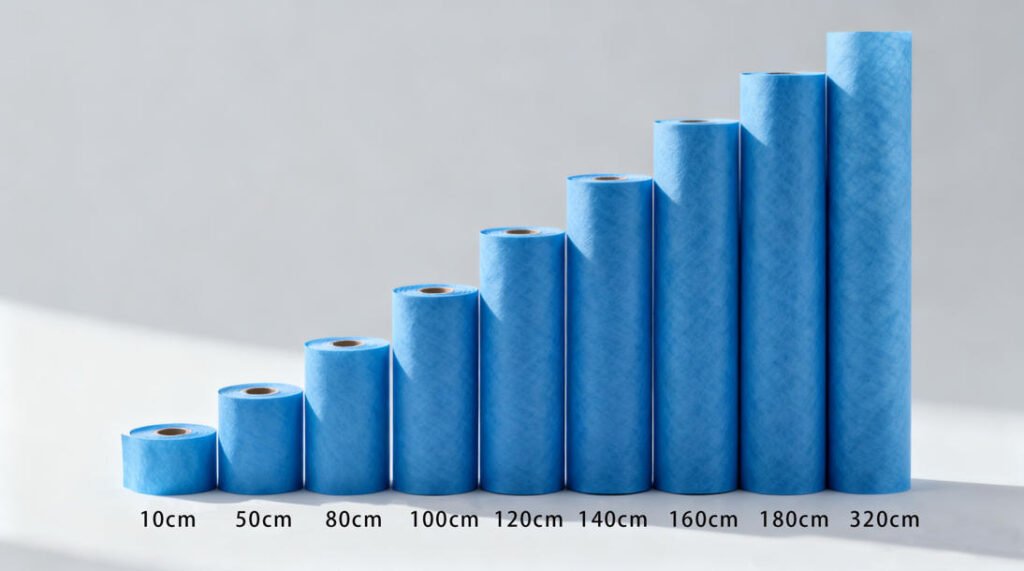
Why It Important: Whether the fabric width aligns with your downstream processing equipment (such as slitting machines, sewing lines, or heat-sealing machines) directly determines material utilization efficiency. An unsuitable width can result in wasted offcuts or necessitate secondary slitting, thereby increasing costs.
Verification Points:
- Effective Width: The usable width remaining after trimming the selvages.
- Width Uniformity: Whether the width remains consistent across the left, center, and right sections of the same fabric roll (to check for skewing issues).
Recommended Practice: Inform your supplier of the precise cut dimensions required for your finished products; they can then recommend the most cost-effective fabric width solution for your needs.
4.Composition
The raw materials of non-woven fabrics directly determine their physical properties, chemical resistance, and environmental grade.
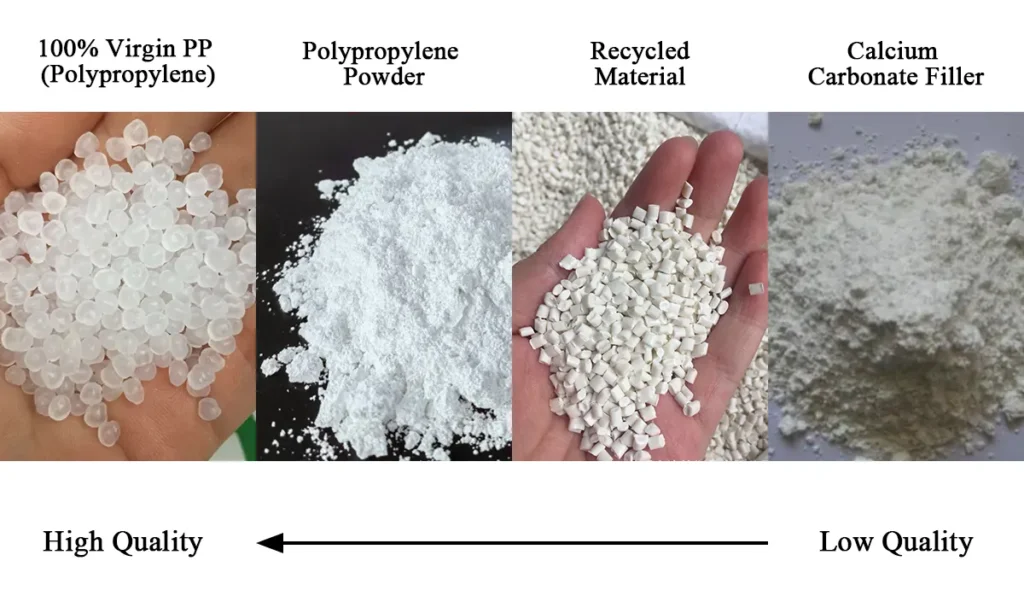
Common Materials:
100% Virgin PP (Polypropylene): Colorless and transparent or milky-white granules, uniform in size, and exhibiting excellent flowability. They possess an outstanding ratio of longitudinal to transverse tensile strength, high elongation at break, and yield a fabric surface that is soft and free of broken filaments..
PP Powder: It is a white, free-flowing powder that is prone to generating dust and exhibits slightly inferior thermal stability; its filament breakage rate is typically higher than that of 100% pp virgin materials.
Recycled Materials: PP granules produced from waste non-woven products, waste fibers, scraps, or discarded plastics through a process of cleaning, crushing, melting, and re-granulation. Due to having undergone thermal-oxidative degradation—once or multiple times—the molecular chains have fractured, resulting in a significant reduction in tensile strength.
Calcium Carbonate Filler:Grayish-white or milky-white granules. They are relatively heavy; the higher the addition rate, the more brittle the fabric becomes, and the poorer its tensile strength.
Key Points for Confirmation:
Is the use of virgin material (100% new stock) required? (This helps avoid reduced strength or unpleasant odors often associated with recycled materials.)
Are specific functional treatments—such as flame retardancy, anti-static properties, antimicrobial resistance, or hydrophilicity—required?
Common Pitfall: Simply specifying “non-woven fabric” is insufficient; it is essential to clearly identify the specific material type and whether any recycled content has been added.
5.Tensile Strength
Tensile strength is a core indicator of the mechanical properties of non-woven fabrics; it is typically expressed in terms of longitudinal (MD) and transverse (CD) breaking strength, with units of N/5cm or N/50mm.
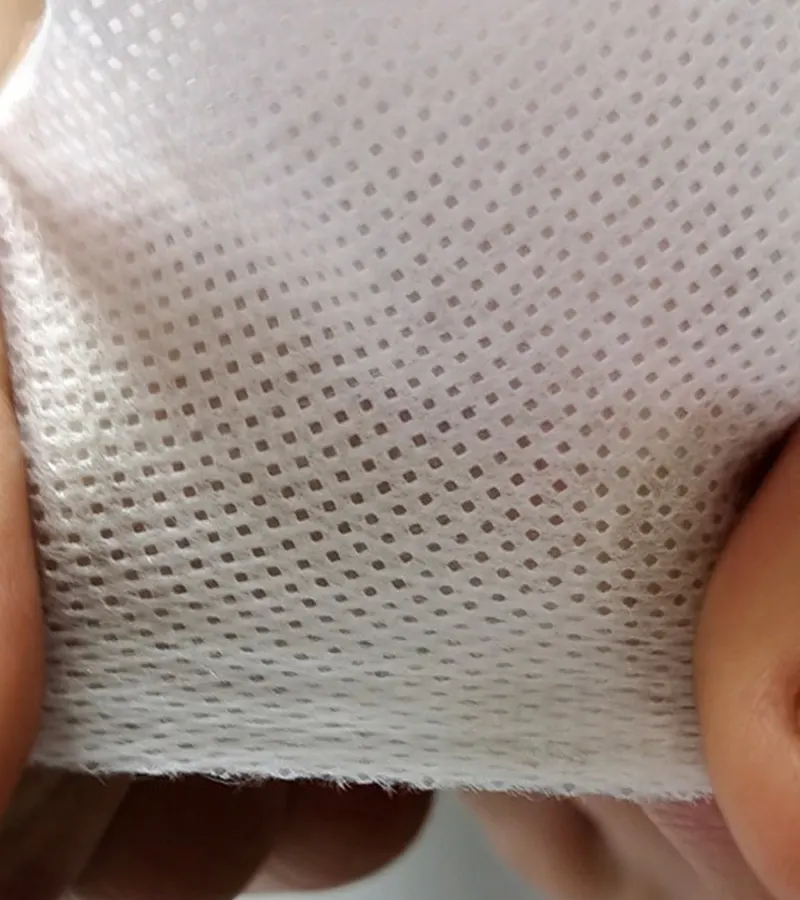
Why It Important: Insufficient tensile strength can lead to tearing or breakage during use. Examples include: shopping bag handles snapping, or seams in protective clothing splitting open.
Verification Checklist:
Specify the required minimum tensile strength values (e.g., MD ≥ 80 N/5 cm, CD ≥ 40 N/5 cm).
Determine whether wet tensile strength is required (applicable to wet wipes or products used in wet environments).
Determine whether puncture resistance or tear propagation resistance is required (for specific industrial applications).
Recommended Practice: Request third-party test reports or internal factory tensile test data from the supplier, and stipulate the acceptance criteria within the contract.