Introduction
The global sleep economy is undergoing an unprecedented transformation. According to the latest 2026 reports from Research and Markets and The Business Research Company, the global mattress market is expected to maintain strong growth momentum from 2026 to 2030. In this wave of growth, non-woven materials are moving from behind the scenes to center stage, becoming a key solution for mattress manufacturers to enhance product performance, reduce production costs, and achieve ESG goals
1. Global Mattress Market Size and Growth Forecast 2026-2030
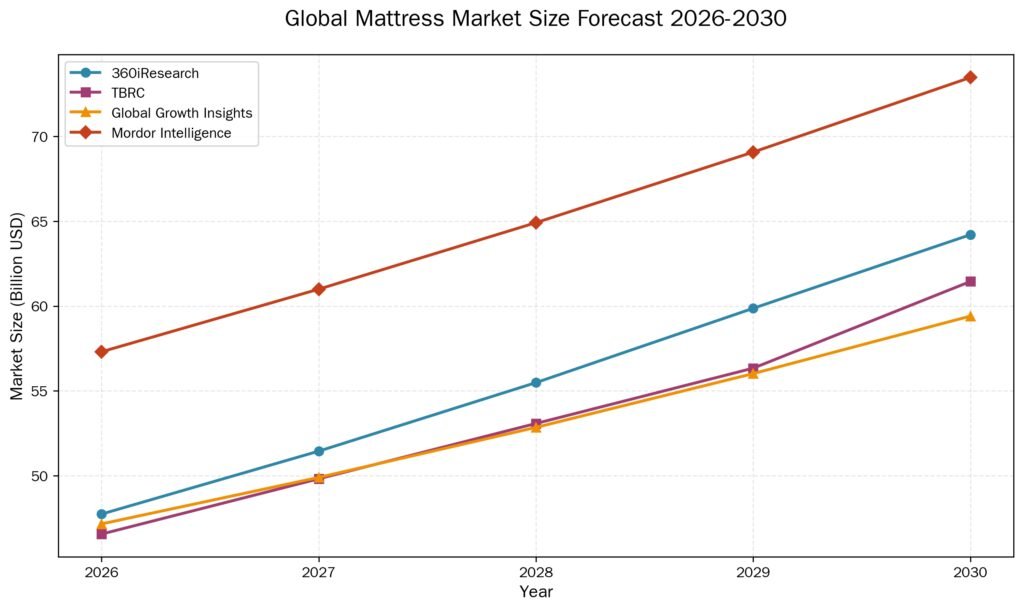
As of 2025, the global mattress market size has reached 43.31billion.Analysisindicatesthatby2026,thisfigurewillgrowto43.31billion.Analysisindicatesthatby2026,thisfigurewillgrowto46.56 billion, with a compound annual growth rate (CAGR) of 7.5%. Looking ahead, the market is expected to break through $61.45 billion by 2030, maintaining a steady CAGR of approximately 7.2% during the forecast period (2026-2030).
Key growth drivers include:
- Health Awareness: Increasing demand for orthopedic and pressure-relief mattresses in an aging society.
- Bed-in-a-Box Revolution: The logistics model of compressed packaging requires materials with high elasticity,high tensile strength and rapid recovery.
- Shorter Replacement Cycles: Consumer focus on sleep hygiene has reduced mattress replacement frequency from 10 years to 6-8 years.
2. Nonwovens: The ”Invisible Skeleton“ in Mattress Manufacturing
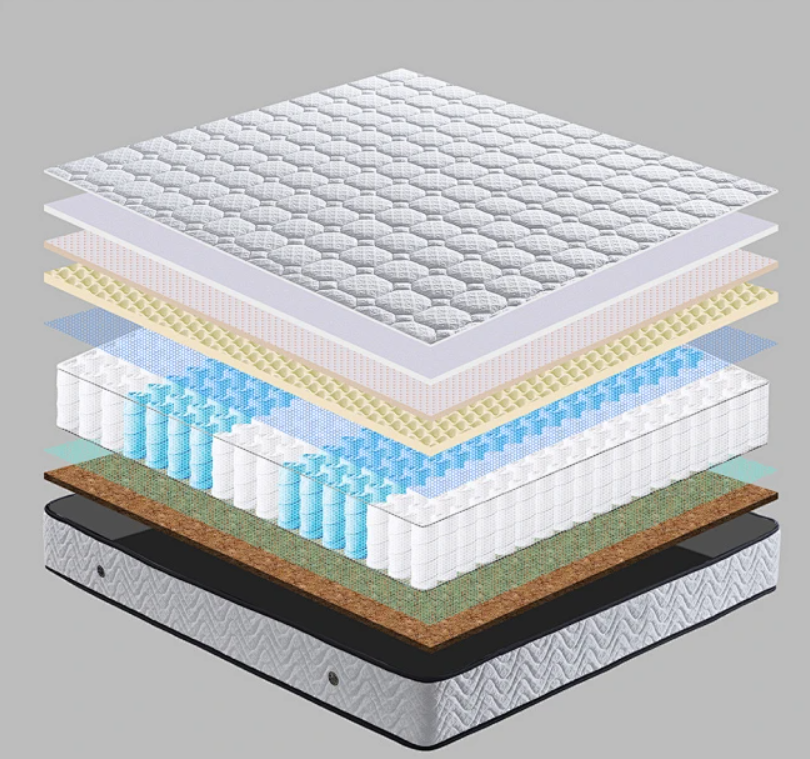
Why are nonwovens so important in this market? A modern mattress is a multi-layer composite structure, and nonwovens appear in almost every critical layer:
- Quilting and Topper Layers: Providing a comfortable feel and breathability.
- Inner Covers and Anti-slip Base Fabrics: Encasing the core material (foam or springs), preventing slippage, and extending lifespan.
- Edge Reinforcement: Thicker, firmer non-woven fabric and springs prevent the mattress edges from collapsing.
3. Key Segment: Explosive Growth of Low Melting Fiber
Among the nonwoven family, Low Melting Fiber (LMF) is the most promising raw material in mattress production. According to industry data, the low-melting fiber market was valued at approximately 2.45billionin2026andisprojectedtoreach2.45billionin2026andisprojectedtoreach3.12 billion by 2030, with a CAGR of 6.3%.
This fiber binds different filling materials firmly through thermal bonding processes without the need for chemical glues. This not only eliminates harmful substances like formaldehyde but also makes mattresses easier to recycle at the end of their life, perfectly aligning with strict environmental regulations in the European and American markets.
4. Sustainability: The Green Advantage of Nonwoven Manufacturing
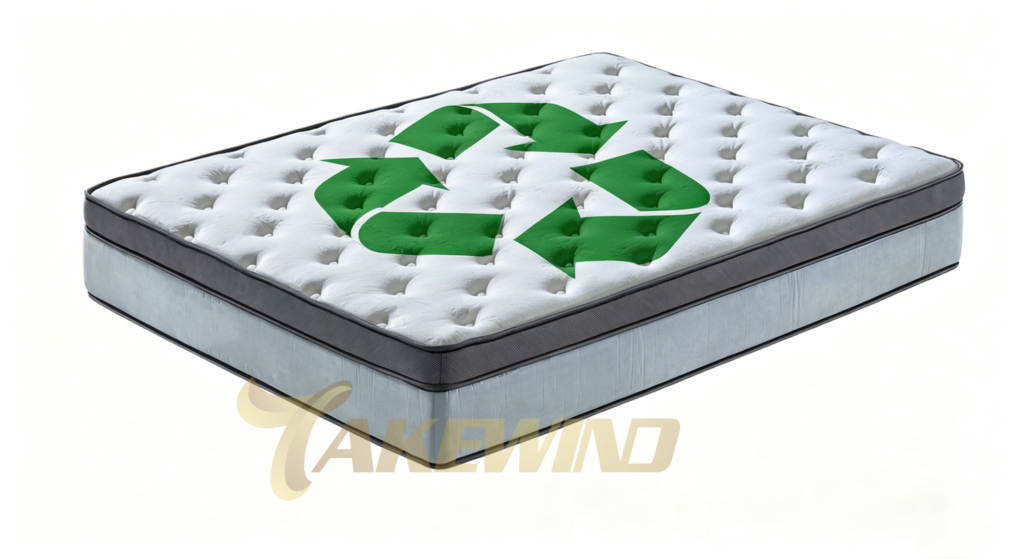
The future trend for mattresses is “circularity” and “modularity.” Nonwovens made from PP and PET fibers can themselves be made from recycled plastic bottles. For mattress manufacturers, using nonwovens for internal components means that at the end of the product’s life, metal springs can be easily separated from foam, drastically reducing recycling costs.
Conclusion
As a nonwoven production factory, we are not just raw material suppliers; we are partners for mattress brands in achieving technological upgrades. In the growth cycle of 2026-2030, enterprises with the capacity to produce high-quality, eco-friendly nonwovens will occupy a favorable position in the supply chain.