
The durability, comfort, and appearance of a sofa depend not only on the outer fabric and frame—the internal structure is the true “skeleton.” In our long-term supply to furniture factories, we have found that sofa bottom cloth and spring units are also the key parts determining sofa lifespan. Nonwoven fabric is rapidly replacing traditional materials and becoming the core choice for sofa internal upgrades.
This article will outline the applications of non-woven fabrics in sofa bottom cloths and spring units, as well as the advantages of using non-woven fabrics.
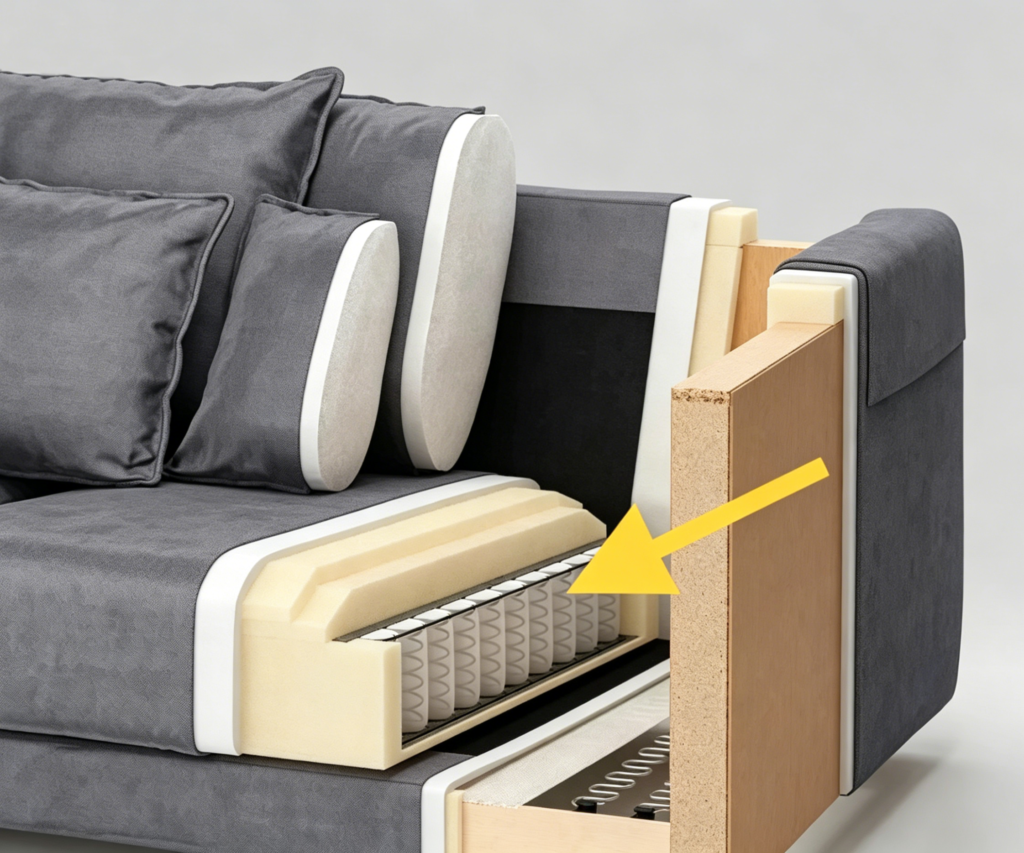
Nonwoven Fabric in Sofa Bottom Cloth: The Key to Support and Dust Prevention
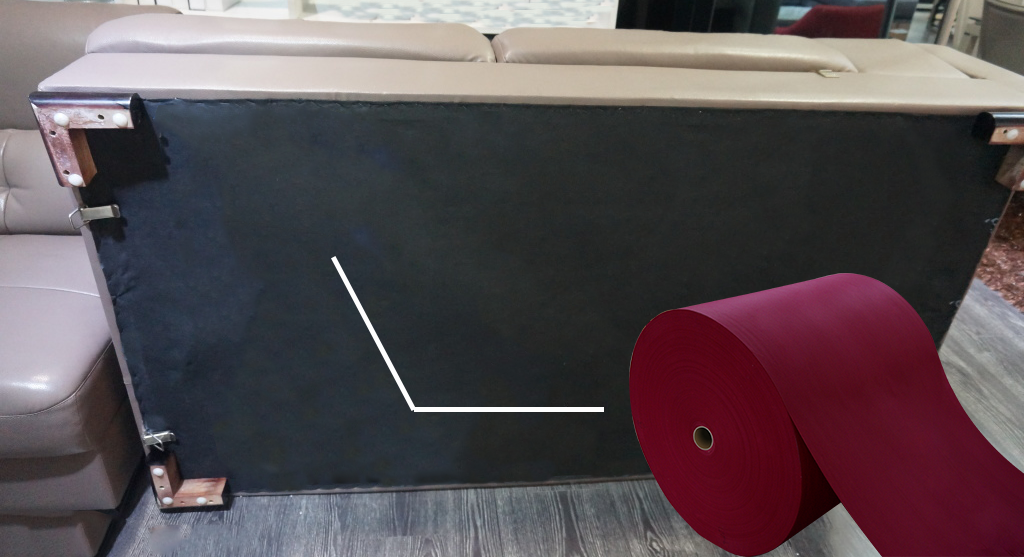
1. The sofa bottom cloth is located beneath the seat cushion, closing off the bottom frame. Its functions are:
- Supporting foam and springs to prevent sagging
- Blocking dust from entering the internal structure
- Maintaining even seating feel
2. Functional Treatment of Non-woven Fabric for Sofa Undersides
- Absence of Functional Treatment: Generally, since sofas are not exposed to direct sunlight, the non-woven fabric used for the sofa’s bottom lining requires no functional treatment to adequately serve its purpose—a solution that also offers lower costs.
- UV Resistance Treatment: To ensure a longer service life and prevent the degradation of the non-woven fabric—a common concern for high-end sofas—the fabric typically undergoes a UV-resistant treatment, thereby extending its lifespan to 5–10 years.
- Flame Retardant Treatment: For certain sofas—particularly those destined for markets in Europe and the Americas—requirements are quite stringent; specifically, the non-woven fabric used for the sofa’s bottom lining must undergo flame retardant treatment, thereby imposing higher standards on the non-woven material.
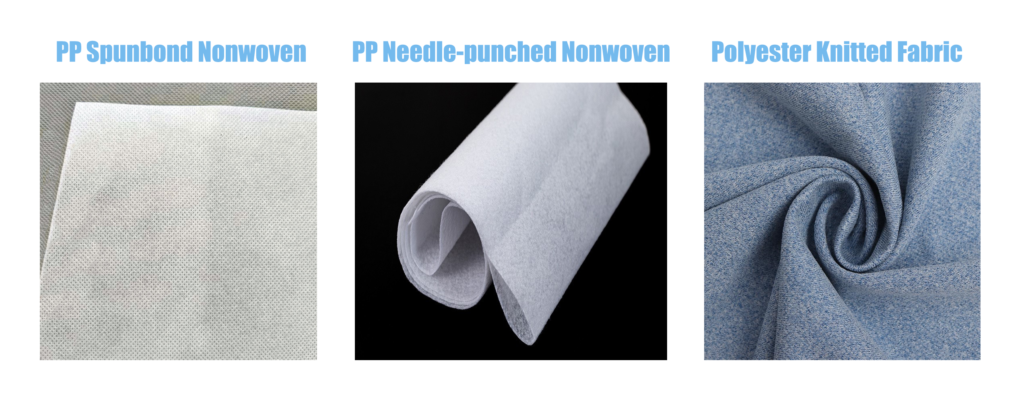
3. Common types:
- Polypropylene spunbond nonwoven: low cost, high strength, suitable for standard sofas
- Polypropylene Needle-Punched Nonwoven Fabric: Higher tensile strength and longer service life, but at a higher cost.
- Polyester Knitted Fabric: Features high tensile strength and a long service life; however, it is difficult to degrade and recycle, incurs the highest usage costs, and contributes to environmental pollution.
4. Advantages over other materials:
| Material | Nonwoven | Black Mesh | Polyester Knitted Fabric |
|---|---|---|---|
| Breathability | Excellent | Fair | Poor |
| Tear resistance | Excellent | Poor | Excellent |
| Cost | Medium | Low | High |
| Service life | 5-10 years | 1-2 years | 5-10 years |
Nonwoven Fabric in Spring Units: Core Material for Noise Reduction and Positioning
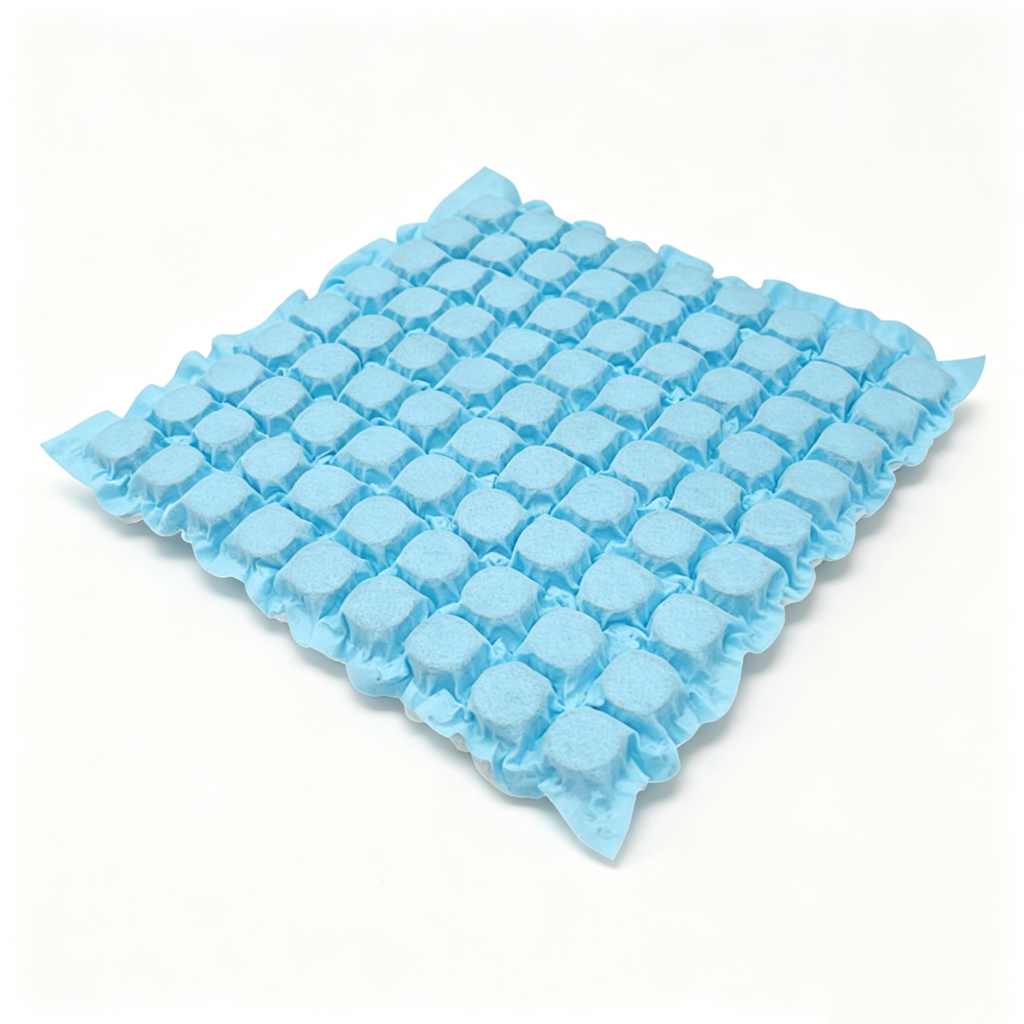
1. Modern sofas mostly use pocket spring units or serpentine springs + nonwoven wrapping structures. Nonwoven fabric plays three roles here:
- Wrapping springs: Pocket springs use nonwoven fabric pouches to isolate each spring, reducing metal-on-metal friction noise
- Fixing spring positions: prevents lateral spring displacement, maintaining even cushion elasticity
- Wear barrier: avoids direct contact and wear between foam and springs
2. Types of nonwoven fabric for spring units:
- High-strength needle-punched nonwoven: high puncture resistance, suitable for heavy-duty spring units,used in High-End Luxury Sofas.
- PP Spunbond Nonwoven Fabric : soft, excellent noise reduction, Ensuring the quality of the sofa while simultaneously reducing costs, as well as being eco-friendly and easy to recycle and good heat-sealing performance
3. Advantages over direct foam contact or bare springs:
- Noise reduction improved by over 50%
- Spring unit service life extended by 3-5 years
- Facilitates automated production (nonwoven can be heat-sealed)
How to Choose the Right Nonwoven Fabric for Your Sofa?
| Sofa Type | Recommended Bottom Cloth Nonwoven | Recommended Spring Unit Nonwoven |
|---|---|---|
| Standard home use | 100-120g/m² spunbond | 70-80g/m² spunbond |
| High-end silent | 100-150g/m² high-strength needle-punched | 50-70g/m² needle-punched |
| Commercial / heavy-duty | 120g/m²+ Polyester Knitted Fabric: | 50-70g/m² needle-punched |
Conclusion: Nonwoven Fabric Is Redefining Sofa Internal Structure Standards
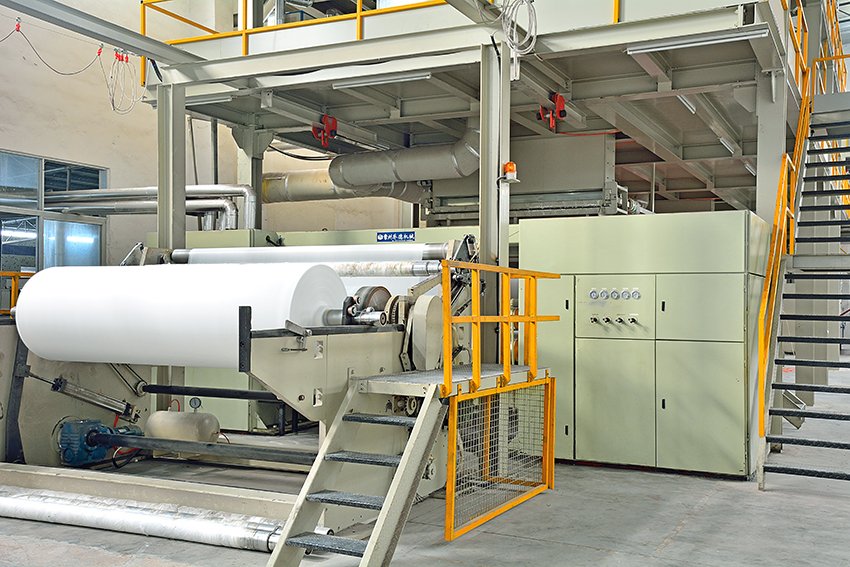
For sofa manufacturers, upgrading bottom cloth and spring units wrapped fabric to professional nonwoven solutions can significantly improve product durability, noise reduction, dust and insect resistance without substantially increasing cost.
As a nonwoven fabric production factory, we recommend starting from material weight, type, and lamination technology to configure the most reasonable nonwoven solution for different sofa grades.