
As a professional nonwoven fabric manufacturer, we understand that different applications (medical, hygiene, filtration, packaging, agriculture) have very different requirements. Determining whether a batch of nonwoven fabric is “qualified” depends on whether its key performance indicators meet the standards. This article systematically breaks down the 7 major indicators affecting nonwoven fabric quality.
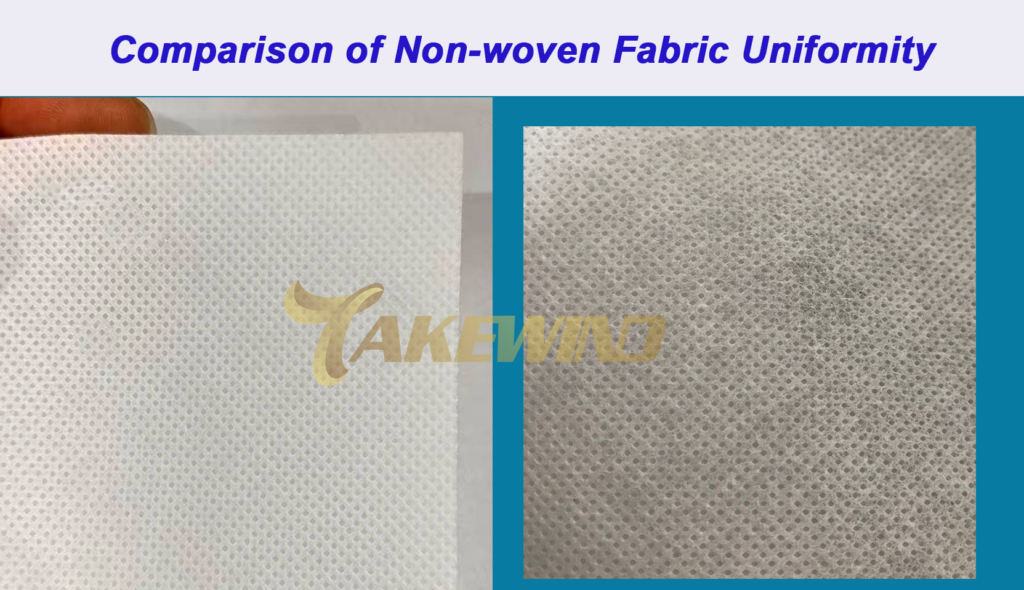
1. Uniformity – The Foundation of Quality
Uniformity means consistency in basis weight, thickness, and fiber distribution. Poor uniformity leads to weak spots or performance fluctuations.
- Test Method:Coefficient of variation (CV) of basis weight, visual inspection, or online scanning.
- Key Factors:Fiber opening, carding process, web formation & bonding uniformity.
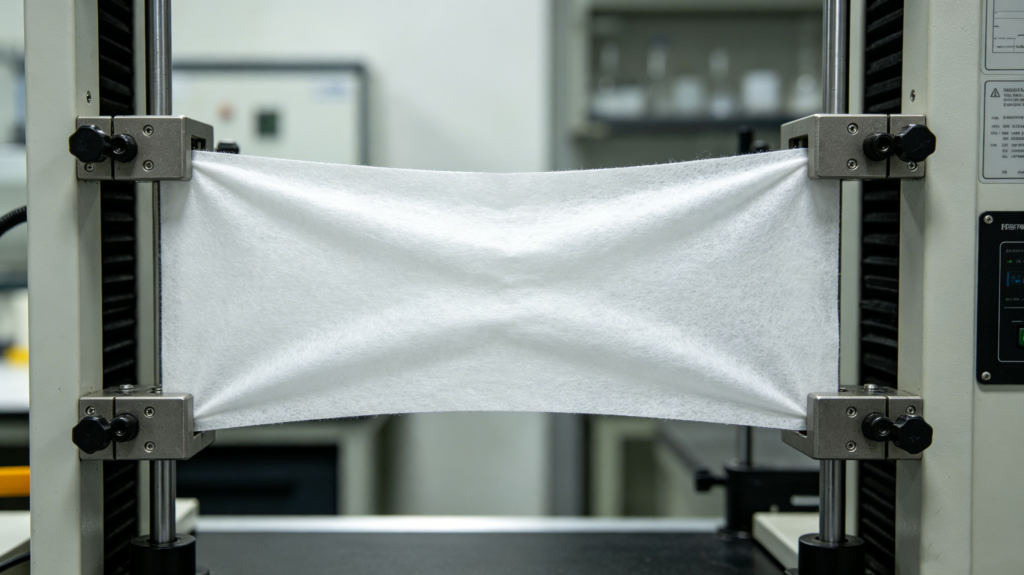
2.Tensile Strength – Ability to Withstand External Forces
Tensile strength is the maximum force before break, measured in machine direction (MD) and cross direction (CD).
- Applications: medical, packaging, geotextiles require high strength
- Test Method:Universal tensile tester, testing both MD (machine direction) and CD (cross direction).
- Key Factors:Fiber strength, thermal/spunlace/spunbond process parameters, fiber entanglement degree.
- Improvement: better fiber entanglement, calendering parameters
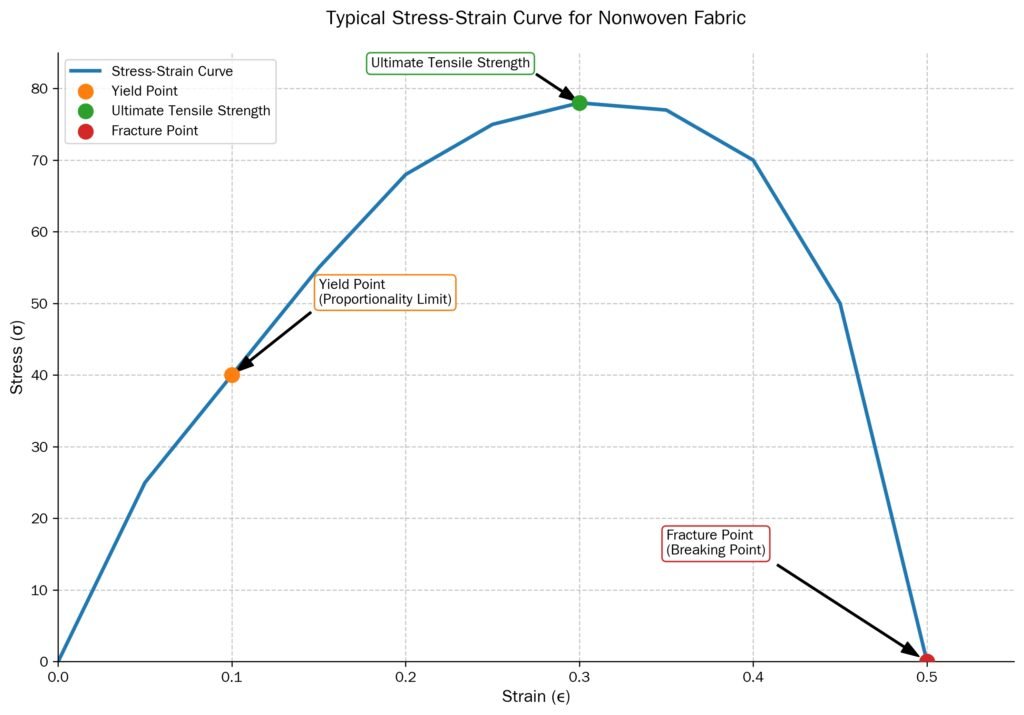
3.Elongation at Break – The Balance of Deformation
Elongation at break is the percentage length increase before breaking. Too high – dimension unstable; too low – brittle.
- Typical Range:Spunbond nonwoven typically ranges 20–60% (depending on formulation).
- Impact: affects tear resistance during lamination, cutting, or wearing
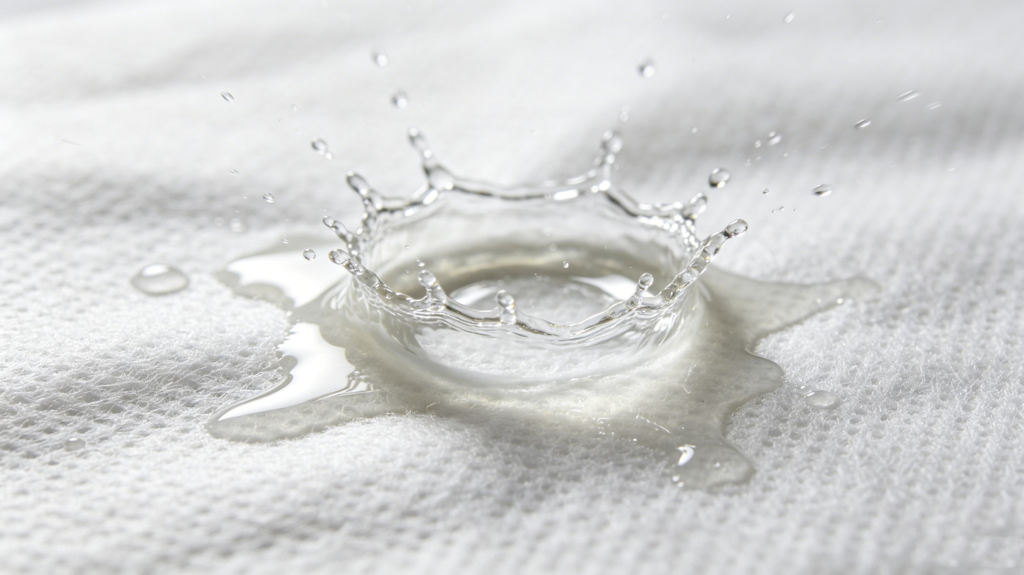
4.Permeability – Liquid Strike-Through Rate
Permeability refers to the time for liquid (e.g., urine, blood) to penetrate from top to back surface. Critical for hygiene products.
- Test Method:Liquid strike-through time and rewet value (e.g., hygiene standards).
- Factors: fiber fineness, pore size, hydrophilic/hydrophobic treatment
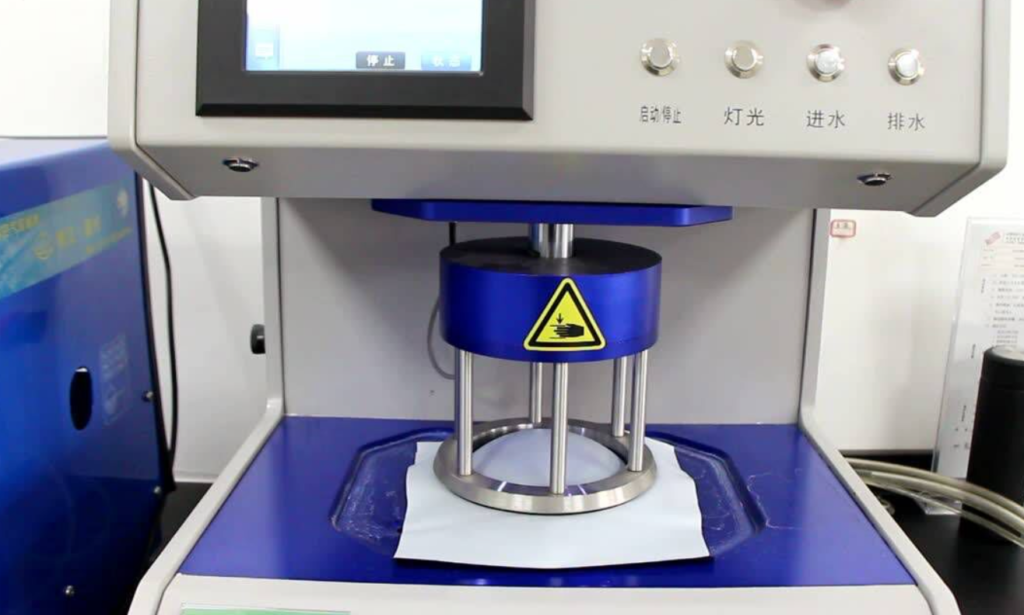
5.Hydrostatic Pressure – Water Resistance
Hydrostatic pressure indicates resistance to water penetration, in cm or mbar. Key for medical gowns and waterproof materials.
- Test Standard:AATCC 127 / ISO 811, expressed in cmH₂O or mmH₂O.
- What the Number Means:Higher hydrostatic head = better water resistance. Typical protective gown requires >100 cmH₂O.
- Improvement: fine fiber layers, water repellent additives
6.Air Permeability – Air Exchange Capacity
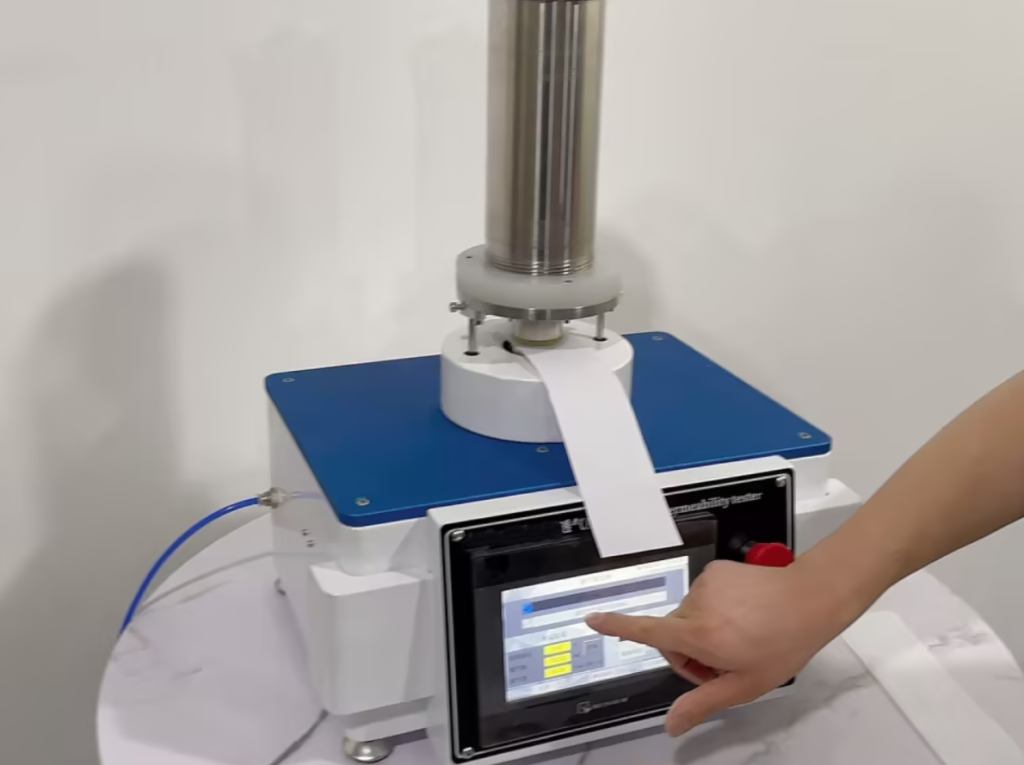
Air permeability is the airflow through fabric per time & pressure (mm/s or cfm). Affects comfort and filtration.
- Range variance: face masks require moderate, filter bags high
- Key Factors:Pore size, thickness, thermal bonding area.
7.Antistatic Property – Safety & Cleanliness Assurance
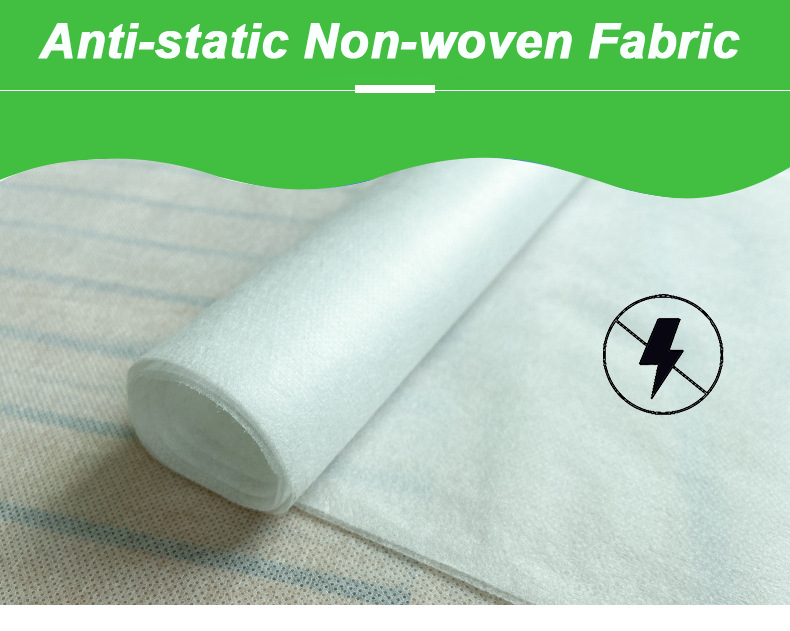
Antistatic property prevents static buildup – avoids dust attraction, shocks, or explosion risks. Used in electronics packaging, surgical gowns, cleanrooms.
- Test Method:Surface resistivity (Ω/sq) or half-life decay time.
- How to Achieve:Add antistatic masterbatch or apply surface coating.
Conclusion: How to Balance These Indicators?
A good nonwoven doesn’t maximize all indicators – it achieves the optimal combination for the application. For example:
- Medical gowns: high hydrostatic pressure + moderate air permeability + antistatic
- Baby diaper topsheet: fast strike-through + low rewet + uniformity
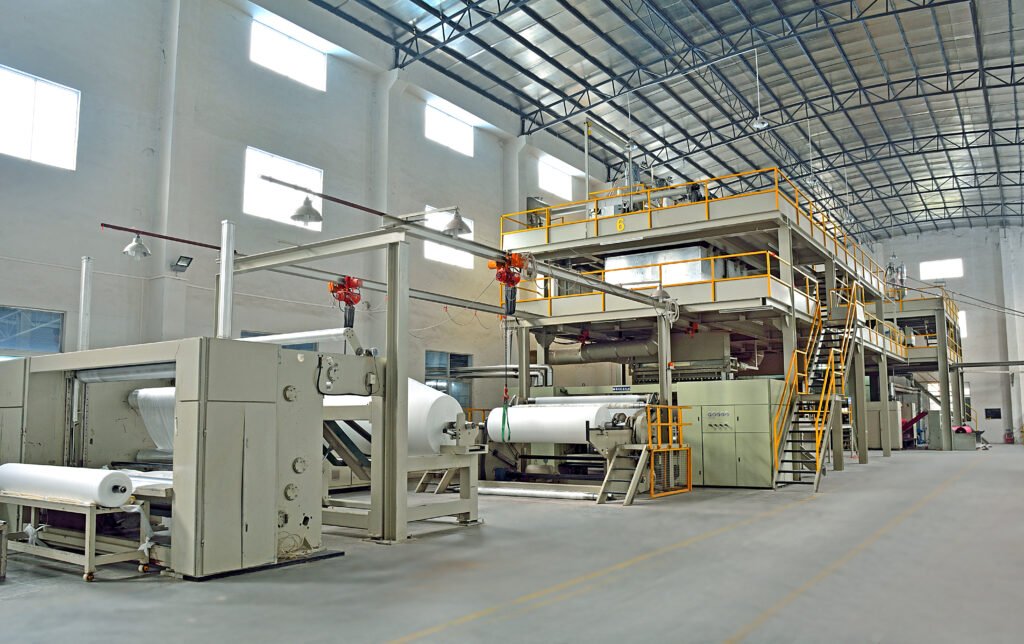
As your Chinese nonwoven partner, we can customize these performance indicators to your needs.
Contact our technical team for samples or let us know your requirements.