
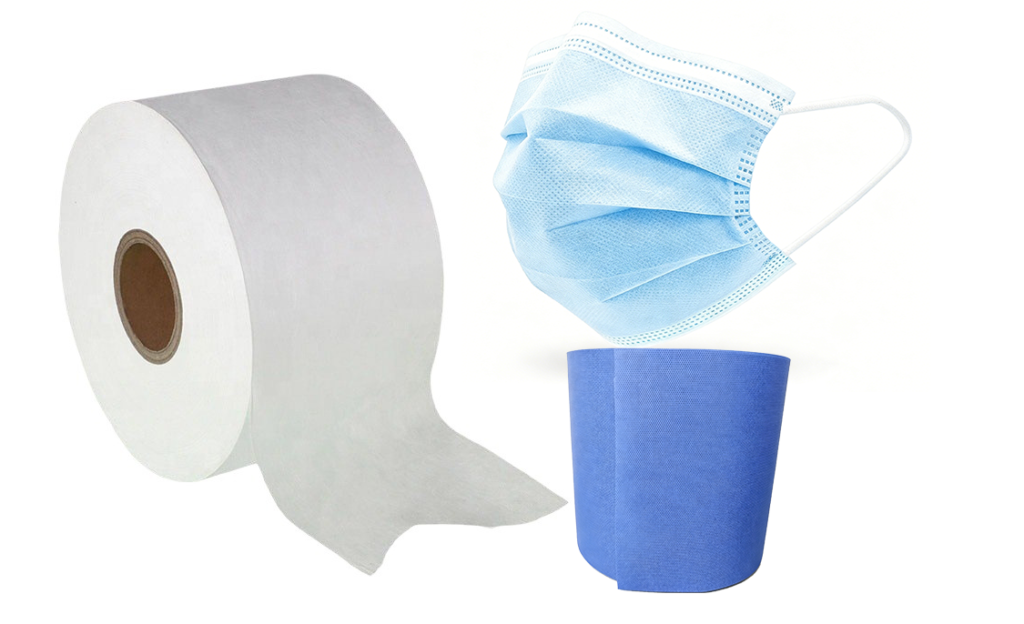
PP spunbond nonwoven fabric is a key material for manufacturing disposable medical masks and civilian protective masks. This article explains in detail its properties, production process, position in the three-layer mask structure, and why it is superior to other nonwoven fabric types.
1.What is PP spunbond nonwoven fabric?
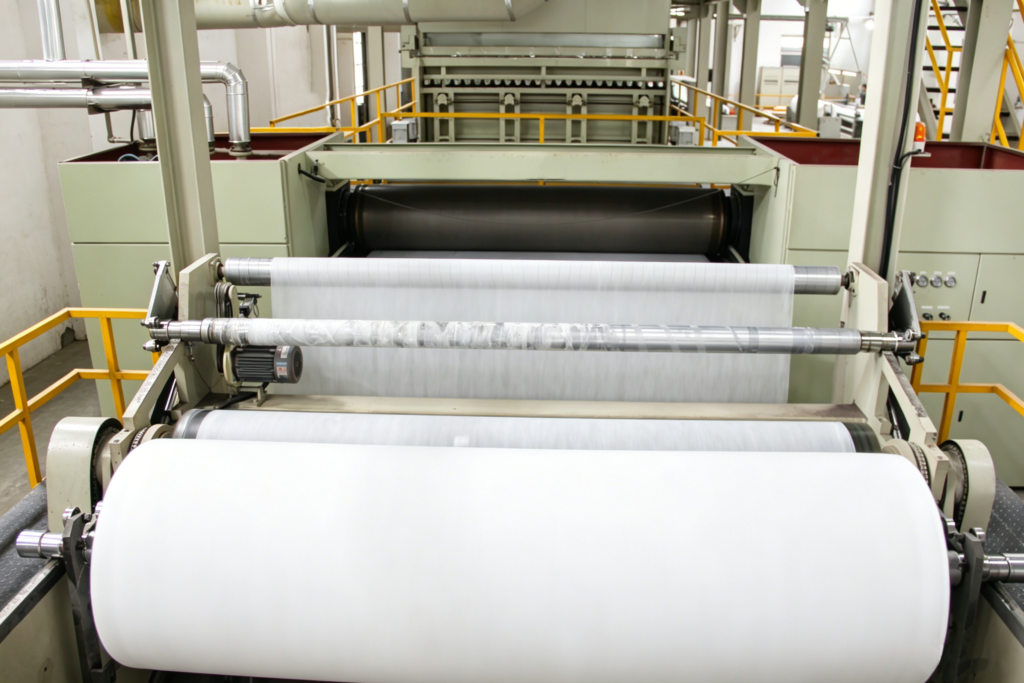
PP spunbond nonwoven fabric is made from polypropylene pellets through high-temperature melting, extrusion, drawing, web laying, and thermal bonding. Its fibers are continuous filaments, offering high strength, good uniformity, and controllable air permeability.
2.The three-layer structure of a face mask and requirements for nonwoven fabrics in each layer.
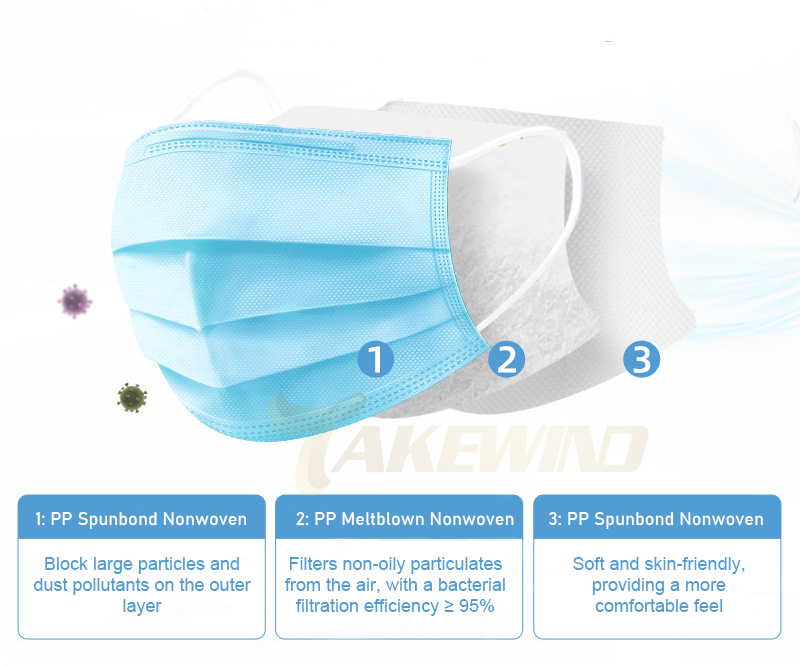
- Outer layer (splash-resistant layer): usually PP spunbond nonwoven fabric, basis weight 25-30 gsm, requiring water repellency and blood penetration resistance.
- Middle layer (filter layer): uses PP meltblown nonwoven fabric, basis weight 15-25 gsm, relying on electrostatic adsorption to filter particles.
- Inner layer (moisture-absorbing layer): uses PP spunbond nonwoven fabric (or spunlace), basis weight 20-25 gsm, requiring softness, skin-friendliness, and moisture absorption.
Note: Although both the outer and inner layers are made of spunbond fabric, the outer layer is often treated with an antimicrobial agent, while the inner layer may undergo a hydrophilic treatment.
3. Why choose PP spunbond nonwoven fabric for masks outer and inner layers?
| Property | Advantage |
|---|---|
| Non-toxic & odorless | Meets medical contact standards |
| High tensile strength | Mask resists tearing, earloops fix firmly |
| Good air permeability | Low pressure drop, easy breathing |
| Chemical resistance | Resists alcohol and disinfectants |
| Heat-sealable | Facilitates ultrasonic welding of earloops and nose clips |
4. Key quality indicators of PP spunbond nonwoven for masks
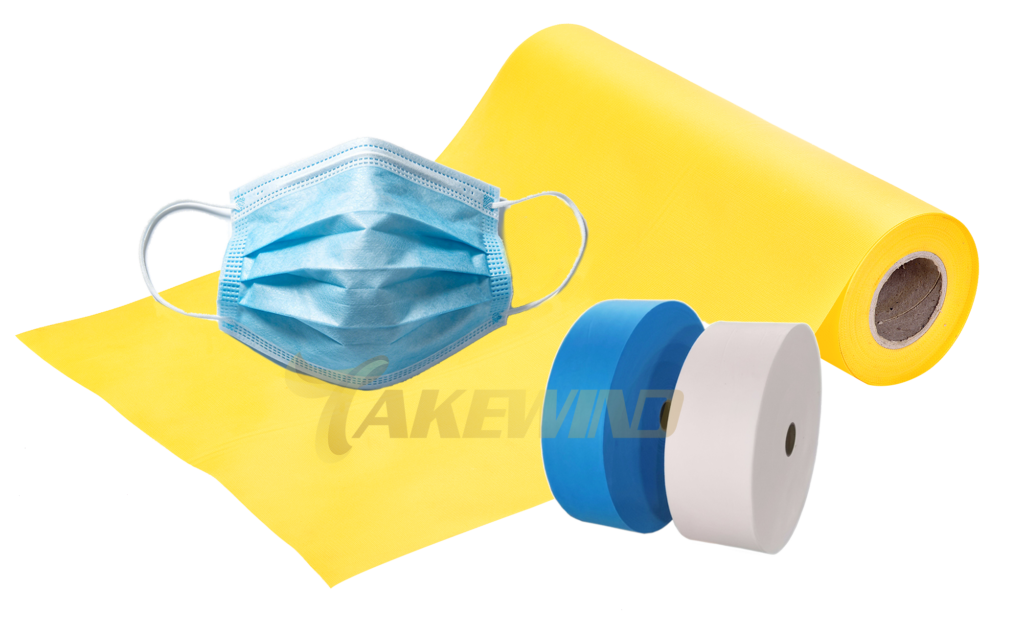
- Basis weight: 20-30 gsm ±5%
- Tensile strength: MD ≥ 80 N/5cm, CD ≥ 40 N/5cm
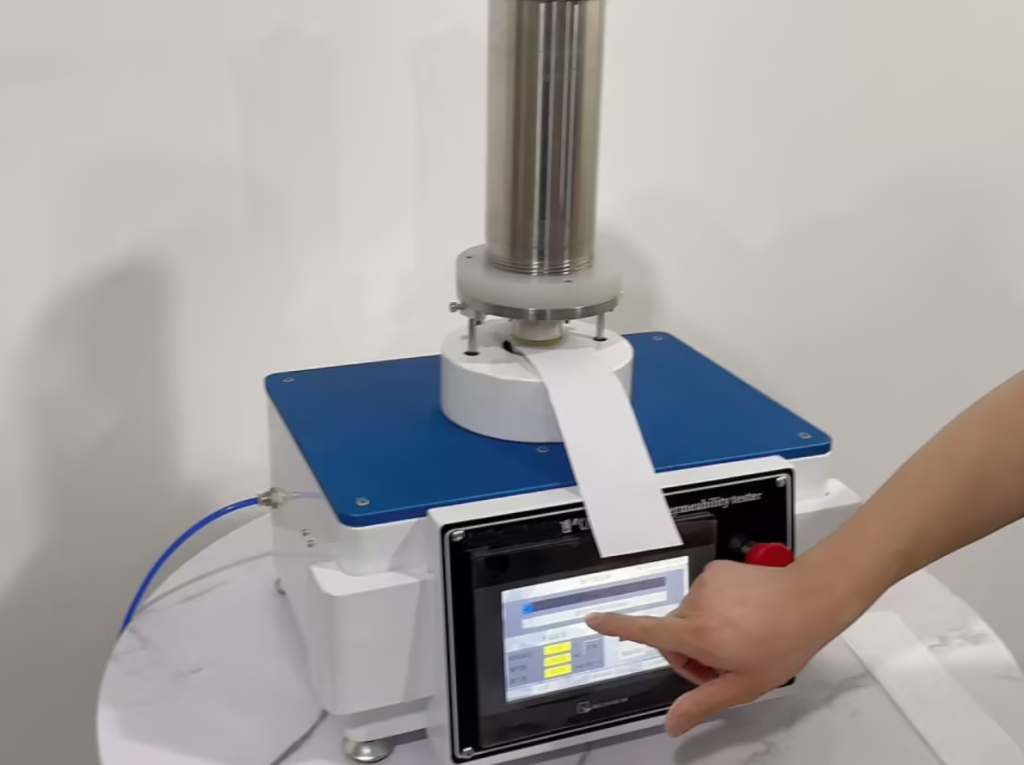
- Air permeability: 300-800 L/m²/s (varies by mask standard)
- Hydrostatic head (for water-repellent outer layer): ≥ 16 cmH₂O
- Basis weight uniformity: CV% ≤ 5%
5.Our PP spunbond nonwoven fabric advantages for mask applications
- Precise weight control: The weight variation of our non-woven fabric is controlled within ±2 grams, making your mask production costs more manageable.
- Multiple colors and patterns can be customized: We support customizing various personalized colors and patterns to make the mask more fashionable
- Low minimum order quantity: A minimum order of 500kg reduces your financial pressure
- Third-party chemical testing: Can provide tests for cytotoxicity, skin irritation, and skin sensitization, etc., making masks safer.
6.Conclusion
Selecting the appropriate PP spunbond non-woven fabric directly impacts the protective efficacy, wearing comfort, and production efficiency of face masks. As a professional manufacturer of non-woven fabrics, we offer customized spunbond fabrics featuring specific basis weights, widths, and water-repellent or hydrophilic treatments. Additionally, we can provide third-party testing reports covering skin sensitization, cytotoxicity, and skin irritation.
For samples or technical datasheets, please contact our sales team.