
For Chinese nonwoven fabric manufacturers, South America is no longer a distant “New World” but the next golden growth frontier in the global furniture supply chain as of 2026. With the political stabilization of major economies like Brazil, Argentina, and Chile, coupled with the strong rise of the middle class, local mattress and sofa producers are facing immense pressure to upgrade their production capacity. This article delves into how the demographic dividend in South America is fueling furniture demand and forecasts the region’s import reliance and specific volume requirements for nonwovens used in furniture.
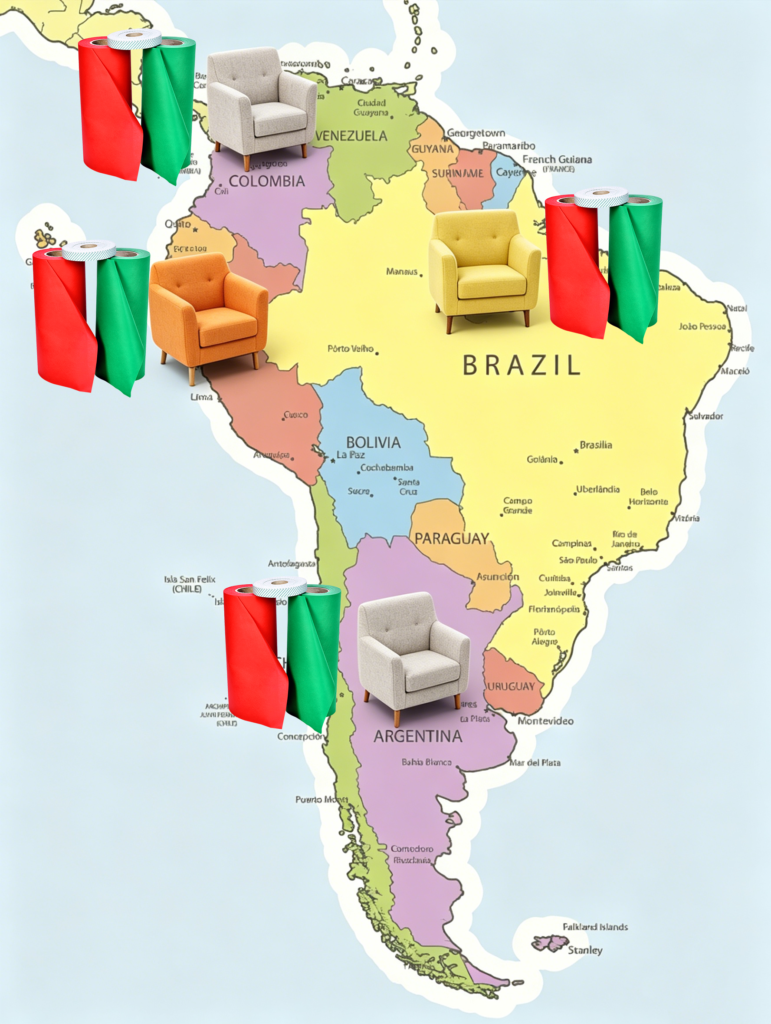
The Transformation of the South American Furniture Market: Why Do Mattress & Sofa Manufacturers Urgently Need to Import Nonwovens?
| Country/Region | 2025 Market Size (Billion USD) | 2030 Forecast Size (Billion USD) | CAGR | Share of South America |
|---|---|---|---|---|
| Brazil | 180 | 350 | 9.2% | 40.0% |
| Argentina | 30 | 50 | 7.2% | 6.7% |
| Colombia | 45 | 80 | 7.8% | 10.0% |
| Chile | 35 | 60 | 7.5% | 7.8% |
| Peru | 25 | 45 | 8.0% | 5.6% |
| Mexico | 80 | 150 | 8.5% | 17.8% |
| Others (Uruguay, Paraguay, Bolivia etc.) | 55 | 95 | 6.5% | 12.1% |
1. Middle-Class Growth & Changing Consumption Habits
South America is undergoing a profound social structural transformation. According to the latest market data, in countries represented by Brazil, Argentina, Colombia, and Chile, the middle class already accounts for more than 30% of the population and is steadily expanding. This demographic is no longer satisfied with low-end, rudimentary furniture; they pursue comfort, design aesthetics, and hygiene.
In terms of mattresses, consumers are increasingly concerned about “sleep health,” leading to a surge in demand for high-quality mattresses with anti-dust mite, antibacterial, and breathable functions. For sofas, the prevalence of hybrid work models (working from home has become the norm) has increased the time people spend on sofas, pushing manufacturers to seek more durable and supportive materials. This consumption upgrade directly translates into rigid demand for upstream raw materials, specifically high-quality nonwoven fabrics.
2. The Dual Boom in Real Estate and Hospitality
Beyond household consumption, the driving force in the commercial sector is equally strong. For instance, the Mexican government’s pledge to build 1 million new homes with zero-interest mortgages is just one microcosm of the housing construction boom across Latin America. The delivery of new homes inevitably brings a large demand for the initial configuration of mattresses and sofas.
Meanwhile, as an international tourism hotspot, South America’s hospitality industry is rapidly recovering and expanding. Hotel renovation cycles are shortening, creating huge demand for flame-retardant and durable nonwoven materials. Notably, plastic (including polymer nonwovens) is the fastest-growing material in office furniture and outdoor sofas due to its high cost-effectiveness and adaptability.
3. Significant Import Dependence & the “Made in China” Opportunity
Although South America possesses some domestic non-woven fabric production capacity, it falls far short of meeting the surging demand. Data indicates that Brazil alone imported non-woven fabrics valued at $269 million in 2025; China served as its largest supplier, accounting for $105 million of these imports in 2025 alone—a figure that continues to grow rapidly.
Furthermore, Argentina’s imports of “wadding, felt, and non-woven fabrics” have consistently remained at a high level. This indicates that the furniture manufacturing industry in South America is heavily reliant on imported raw materials. Due to high localized production costs and existing technological barriers, this dependency is expected to intensify in the future, driven by the furniture market’s projected Compound Annual Growth Rate (CAGR) of 6.01%.
Precise Calculation: How Much Furniture-Grade Nonwoven Fabric Does South America Need to Import Annually?
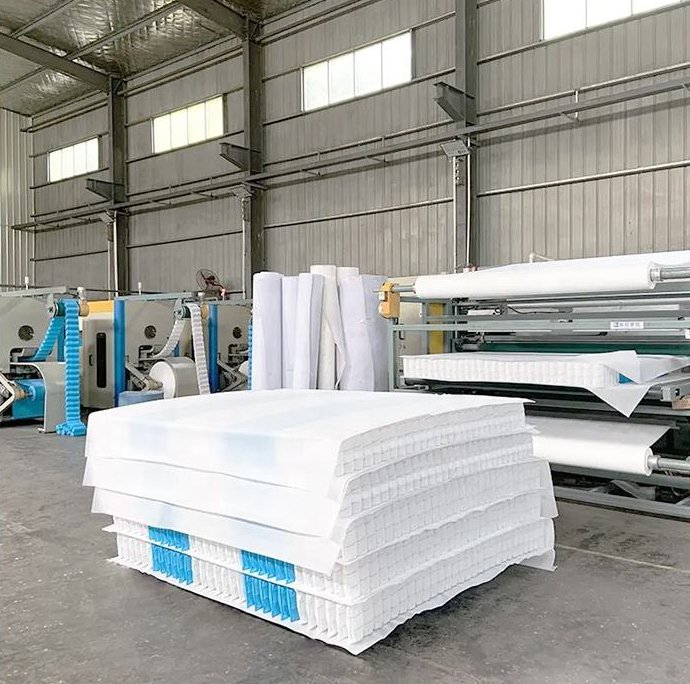
1. The Mattress Industry: A Major Consumer of Nonwovens
Every mattress is, in essence, an “assembly” of non-woven fabrics. Whether serving as the side border strip (sewed along the mattress perimeter), the surface fabric (sewed onto the top layer), the internal pocket spring encasement (isolating the springs from the foam), or the bottom backing (providing anti-slip properties), non-woven fabrics play an indispensable role.
- Estimation Logic: A standard mattress requires approximately 2-3 kg of nonwoven fabric (depending on the process).
- Market Gap: Assuming that South America (focusing on the five key countries: Brazil, Argentina, Colombia, Chile, Peru) produces/replaces 40 million mattresses annually, the mattress sector alone requires approximately 100,000 tons of nonwovens. Given limited local production capacity, at least 60% of this needs to be imported.
2. The Sofa Industry: Nonwoven Penetration from Frame to Cover
Non-woven fabric serves as an auxiliary material within the internal structure of sofas (specifically for backrests, undersides, and spring assemblies). With the growing popularity of “sleeper sofas” and functional sofas in South America, the demand for non-woven fabric has increased accordingly.
- Market Potential: Plastics and synthetic materials constitute the fastest-growing segment of the South American office furniture market. This implies that demand for sofa base fabrics, lining materials, and seat cushion springs—typically manufactured from polypropylene or polyester non-woven fabrics—will continue its upward trend.
Why Choose a Chinese Nonwoven Factory as Your South American Supplier?
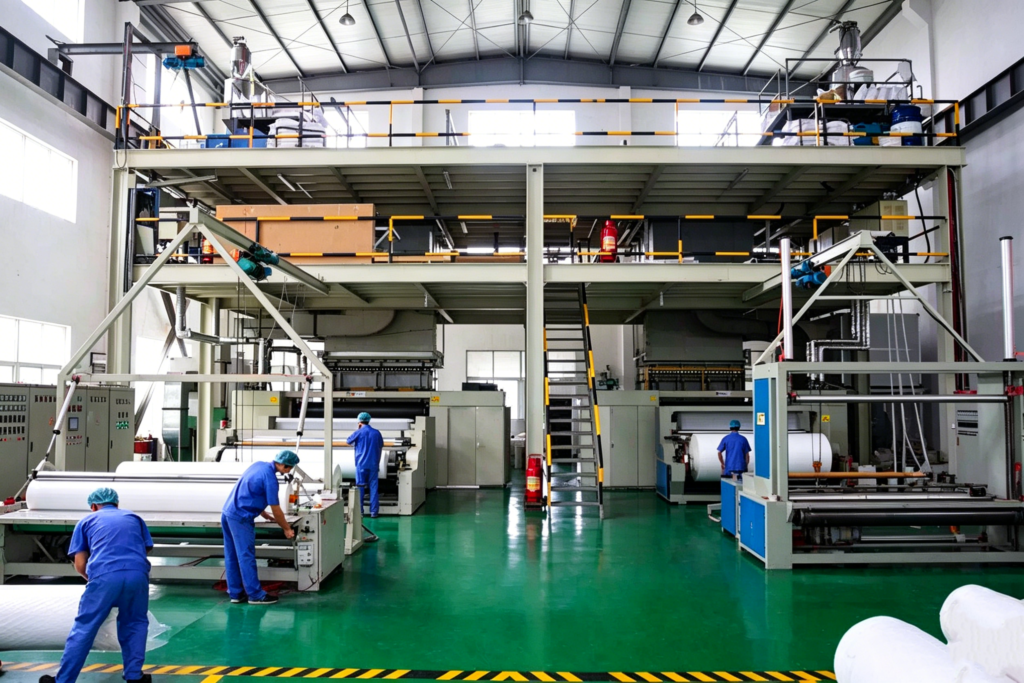
Faced with this “blue ocean” market, local manufacturers in South America often encounter three key pain points:
- Small scale, outdated equipment, and limited production capacity.
- Significant price volatility, with a heavy reliance on imports for upstream raw materials.
- High production costs: exorbitant labor costs and taxes.
As a professional Chinese nonwoven fabric factory, we offer:
- Cost-effectiveness: The scale effect of China’s mature nonwoven industry chain can help South American customers reduce raw material procurement costs by at least 20%-30%.
- Full Product Range:From mattress fabrics, mattress surrounds (high-resilience hard cotton), to sofa base fabrics (flame-retardant non-woven fabrics, anti-aging PP non-woven fabrics), sofa backrests, and linings (all available)
- Customized service: All sofa and mattress materials can be customized to specifications.
- Low Minimum Order Quantity: A minimum order of just 500 kg is required, thereby reducing financial pressure on our customers.
Customization: We can provide specific weights, widths, and colors based on the local climate of South America (e.g., tropical rainforest climates require highly breathable materials).
Conclusion
Driven by economic growth, the expansion of the middle class, and a substantial demographic dividend, the South American furniture market has experienced significant growth in both development and demand. Consequently, the demand for non-woven fabrics—specifically those used for sofas, mattresses, flame retardancy, and UV resistance—is also steadily increasing.
Contact us to obtain samples of non-woven fabric for furniture; we can help you lower your furniture production costs.